
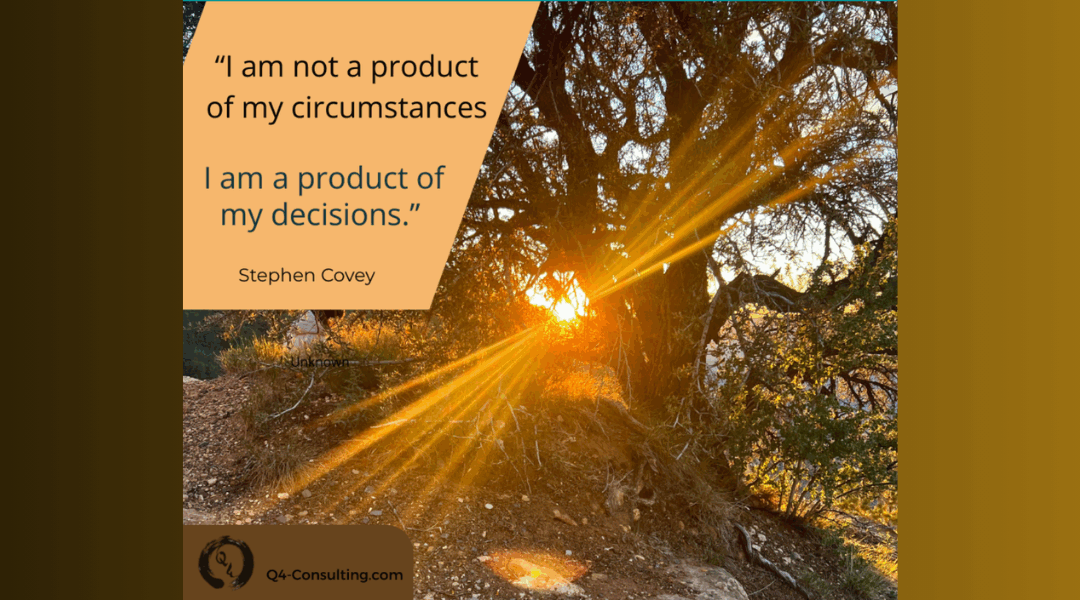
At the tail end of our Grand Canyon trip, we were at Dick’s Last Resort for breakfast in Las Vegas. If you know the Chicago location of this restaurant chain, you know the vibe: irreverent, a little zany, servers who roast you with a wink and a smile.
I was ready for that. What we got was something else entirely.
After standing at the hostess station with no one in sight, I asked the tall blonde server if we could seat ourselves. She snapped that there was someone at the hostess station (there wasn’t) and then muttered loud enough for us to hear, “Some people are just so impatient.”
She threw our menus on the table. When I looked at her — having waitressed my way through two graduate degrees, I know a smidge about service — she smiled sheepishly, put her wrist under her chin, and gave us a little finger wave. A mocking “aww.”
“Have you been to Dick’s before?”
“Yes.”
“Then why the hell did you come back, Golden Girls?”
“We’d love some coffee,” I replied, “I didn’t offer you any,” her dismissive tone palpable to us all.
In that moment I knew. She wasn’t performing the irreverent Dick’s shtick; she was enjoying the disdain and cruelty.
Mom shook her head. “I’m not sure I want to eat here.”
We got up and left and found our way to the breakfast buffet. I spent the next hour trying to shake the emotional residue of what had just happened, as the pall of the exchange stayed with me. Honestly, my own reaction unsettled me as much as the blonde’s behavior did.
WHAT’S ACTUALLY HAPPENING
Everybody’s emotions are closer to the surface right now. Every single person.
That’s not an excuse for cruelty, simply its context.
Prevailing structures that once promoted civility — clear workplace expectations, norms around how we treat each other, a shared baseline of what’s acceptable — are fracturing and eroding.
Post-COVID distance, AI anxiety, economic pressure, and yes, political figures who model contempt as strength, all have contributed to, and deemed acceptable, a certain kind of unleashing of our basest instincts.
The blonde server’s comment that stuck with me was this one: “Oh, everybody’s so impatient,” setting the table for her manner of engagement.
She wasn’t entirely wrong, so many of us are more impatient today. Yet the answer to collective activation is not more activation; cruelty warranted by someone else’s impatience.
Our nervous systems are running hot. That’s not a metaphor, but a physiological reality.
When the environment signals threat, the body responds accordingly: elevated cortisol, fight-or-flight reactions set off on a hair trigger, empathy and higher-order thinking going offline. We are all, to varying degrees, operating from that state more than we realize.
And when someone like the server acts out, it lands in a body that is already primed. The reaction is fast, real, and entirely human. Mine was too.

FEEL IT FIRST. ALL OF IT.
What I am reminded of reflecting on our Vegas morning and knowing what I know from 30 years of working with the nervous systems of many, including my own, is that we need to learn to stay, at least a bit, with all of our experiences.
If we don’t linger long enough to feel our experience, but move straight into action, we integrate very little. Instead, we export our activation elsewhere, like a virulent virus adding to the illness.
Think back to the last time you were triggered, activated, out-of-my-mind irritated by someone’s bad behavior. A colleague who dismissed you in a meeting. A neighbor who crossed a line. A family member who said the wrong thing at the wrong time.
What happened in your body? What story started running almost immediately?
The four most common reactions when threat lands:
Fight. Rising up, getting sharp, pushing back
Flight. Withdrawing, backing away, going quiet.
Freeze. Shutting down momentarily, helpless, not knowing what to do.
Fawn. Acquiescing, going along, shrinking inside yourself to stay safe.
None of these are wrong or bad responses. They’re the actions of a nervous system doing exactly what it was designed to do.
But if we move into action from those states — retaliating, stewing, dissociating, people-pleasing — without pausing to feel what’s present, we miss the integration that can transform experience into wisdom.
What I’ve been saying for a long time is this: we need to feel more, not less.
Not wallow, or spin stories about what happened, why, and what it means about us and the world. But to feel the raw experience in our bodies — the heat of outrage, the sting of disrespect, the low-grade grief of living in a time when basic civility is up for grabs — and let that move through us.
That move is where the integration happens, and how, quite literally, we come back to ourselves
WHAT I DID
Neuroscientist Jill Bolte Taylor’s research tells us that the physiological charge of an emotion — the actual wave of it in the body — lasts only about 90 seconds, that is, if we don’t feed it with thoughts that keeps us churning out yet another story we layer on top.
Being human is to be triggered. It’s as inevitable as breathing. It means our
psychobiology is working to keep us out of harm’s way, or to send up a warning flag that a value we hold dear (dignity, connection, respect all come to mind in this example) has been crossed.
The key is to learn to observe our triggers, come to know them, calm them down to reclaim, and redirect attention and energy to direct the daily traffic — emotional, digital, interpersonal — of our days.
Knowing this, I paused, let myself feel the fullness of my disgust, the disrespect and the protective urge toward my family. To be clear, it took a few rounds of this for my experience to fully settle.
HOW TO OBSERVE TRIGGERS
1) Next time something activates you: set a timer for 90 seconds.
2) Place one hand on your belly, one on your heart. Breathe. Feel the sensation without naming it, judging it, or explaining it. Just let the body complete its response.
3) Then ask: what am I actually protecting right now? Dignity? Safety? A value that matters deeply to me?
That question will move you from reactive to responsive.
WHAT I TOOK HOME FROM THAT MORNING
We got up and left Dick’s that morning. It was the right move, a power move.
We voted with our feet, which is one of the most grounded responses available, from a quiet, clear sense that people deserve to be treated with basic dignity.
The server rolled her eyes as we walked out. And I let myself feel that too.
The indignation of it, the sadness underneath it, the bigger grief of living in a moment when cruelty is normalized. I felt pity for her.
Then I chose to let it all go. Not because it didn’t matter, but because I refused to carry it forward for the rest of my day with my family.
This is the essence of what it means to pause. It’s in no way the absence of feeling, but quite the opposite. It’s experiencing the full presence of our experiences and then making a conscious choice about what to do next.
IF THIS IS LANDING FOR YOU
The work of staying human in an inhuman moment is real work. It requires ongoing practice, not simply intention.
The Leadership Pause Book of Practices is designed for exactly this — building the embodied habits that help you feel, integrate, and lead from your best self, even when the world around you is running hot.
If you want a personal look at where your own nervous system is right now and what practices will actually move the needle, let’s start with an Executive Energy Audit — a 30-minute no-cost conversation about where you are, what’s draining you, and what comes next.
Reach me at any time at dr*****@**********ng.com.
You become what you practice. Right now, let’s practice feeling it all.