I’ve been sitting with a question for these past few months. What will really help leaders?
I set out earlier this year to listen to the voices of those who are leading in this era of accelerating complexity. (Still In It is the report and you can access it here).
Beneath the surface of their work, all the initiatives, strategies, and genuine commitment to doing business well, I heard a kind of sustained bracing against a world that just can’t sit still.
A world caught up in performative pushing that results in increasingly higher levels of stress, stress to the point of burnout which is at epidemic levels today.
I have lots of ideas about what might help. What I’m most curious about, however, is what helps at the level of our nervous system, individually, but also within our collective nervous system.
I have a hunch that the most overlooked antidote is right in front of us.
We Forget We’re Creatures Too
Look around at where you spend your day. If you’re like most of us, we’re encased in metal and concrete, surrounded by glass and plastic, screen lighting up buzzing and beeping.
Our interactions are over-scheduled, mediated, filtered, and optimized.
Heck, we run to get out of the rain, and curse when it’s too hot outside or when the AC is on the fritz.
We scroll images of forests and sunsets and mountaintop and call it nature.
Meanwhile our nervous systems clearly haven’t gotten the update. Our capacity to adapt is not nearly as great as the technologies that we’re now surrounded by and the challenges they’ve wrought.
Our nervous systems are ancient, still wired for soil underneath our feet, wind on our skin, and the sound of water moving to soothe us. The mismatch between what our biology responds to, even expects, and what our daily environments deliver to us is real, cumulative, and it’s taking its toll.
Neuroscientist and journalist Clayton Aldhern, in his book “The Weight of Nature,” writes about what he calls the direct interventions of environmental changes on our physical brains. We are becoming, he argues, more suspicious, more anxious, more distracted, and even nihilistic.
Climate change, he writes, isn’t only out there; it actually lives inside of each of us.
We’ve outsourced our regulation to artificial environments a long time ago, and we’re now paying the price in ways that mostly we can’t even fully name. When we lose touch with nature we lose touch with our deepest self.
Bur Oak Lessons
I’ve always loved being out in nature, digging in the dirt. Both of my grandmothers were avid gardeners. My mom is a master gardener.
Over Memorial Day weekend, I was in heaven cleaning up the garden, planting plants, beautifying the tiny space of heaven that we share. I was delighted when a handful of people walked by saying, “I love your garden.” “It’s so peaceful here.” “I feel so good when I walk by.”
Nature touches us, resources us if and when we allow it.
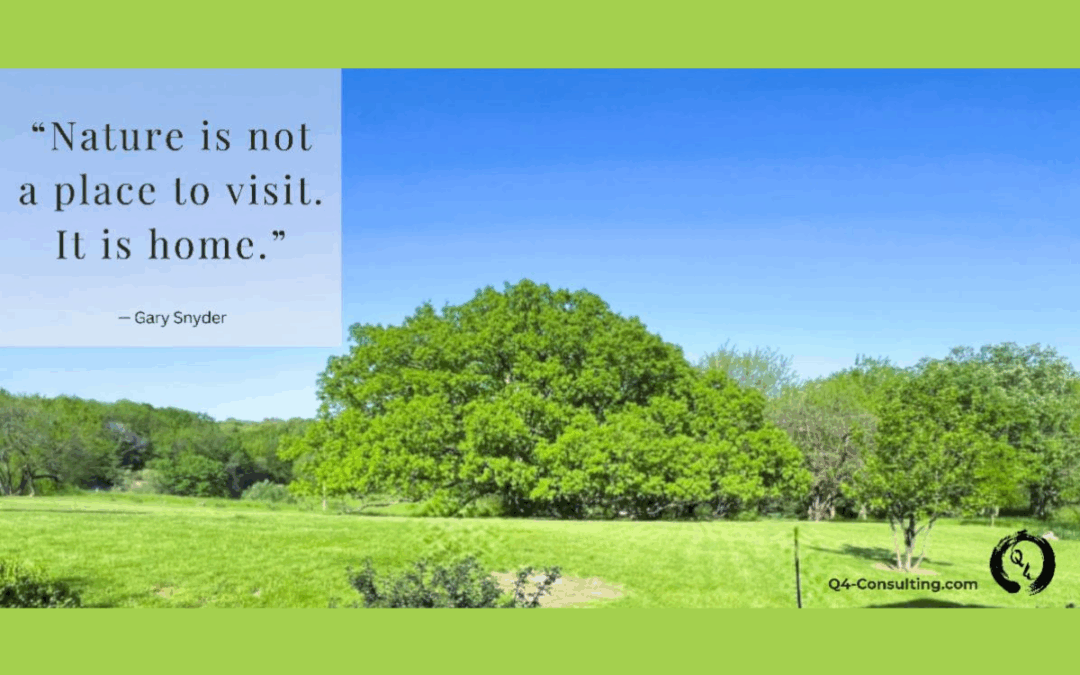
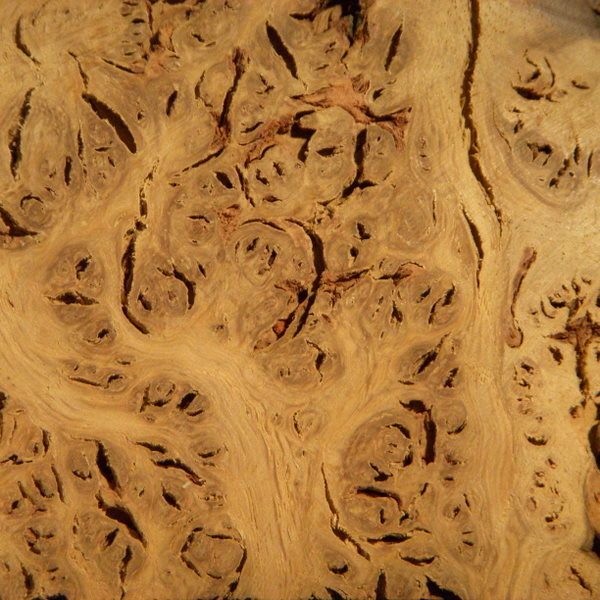
Trees have always been a part of it. There’s a bur oak at the end of my family’s long winding driveway. Its acorns wear bristly husks like little woolen ski caps, its bark is deeply grooved and grayish, textured like something that has earned its age.
As a kid growing up that oak tree was mine.
When home felt unsteady, and sometimes it did, I would find my way to the shelter of that oak tree. I’d press my hand against the deep-textured bark. I’d lean in and something in me would begin to settle.
Of course, I didn’t have language for it as a kid but now I do. I was co-regulating my nervous system with a living system far older and more stable than me. I was letting the tree’s rootedness influence my body, absorbing stability through contact. It was amazing.
The tree isn’t a metaphor for strength but a source of it. Metaphors live in the mind, but this lived in my breathing, my lungs, my chest, my whole body. I was nature too.
What the leaders on my listening tour over these last months were describing — the bracing, the vigilance, the exhaustion of constant uncertainty, even the burnout — is a nervous system problem. It’s systemic, not just individual. It lives inside our biological systems but also our collective relational systems at work.
The nervous system responds to what the body actually touches, hears, smells, and stands inside of.
When we’re all together we can all get hyped up and anxious and over the top or we can learn together to co-regulate our nervous systems and settle like I did with my tree.
Nature as Leadership Practice
Here’s what I notice about the leaders who are doing their best right now.
They haven’t found better answers about how to work with AI or navigate the stresses of multiple employees or contracts going south or tariffs impacting.
What they’ve done is they found more stable ground to stand on, literally and figuratively.
The Still In It report that I created this spring, sharing many of their thoughts, surfaced something important about this particular moment. The leaders who are navigating uncertainty with the most grace are the ones who’ve built practices that return them to themselves. These are practices of presence. Many of those practices, when you trace them far enough, lead us outside.
Think about it, taking a walk without a podcast, pausing to take in a sweet garden like some of my neighbors did last week, noticing a gentle breeze at an open window, or eating lunch on a bench instead of at a desk, basking in the sun.
These might sound small because we’ve been trained to measure value in outputs, but your nervous system doesn’t care about outputs. It cares about signals for safety and connection, belonging. Nature sends those signals in a language that the body happens to already know.
This is the shift I want to name for our leaders today, for each and every one of us. Nature isn’t a reward for finishing our work, it’s part of the work. It’s how you can stay clear enough, grounded enough, and present to lead when everything else around seems chaotic.
Attention is our most valuable leadership asset. Nature restores our attention. It brings us back into the moment and to the positive, measurable effects of green space on cortisol levels. Those oak trees on the farm that I grew up on, they were doing something really, really important.
Claim Your Tree
You don’t need to move out to the country, although it was great place to grow up. And, I’m not even suggesting that you go on a wilderness trip or to Sedona or forest bathing or any of that kind of stuff, although I’d never certainly talk you out of it.
I’m asking you to notice where nature is already present in your life and try to make more deliberate contact with it.
To stop treating nature as a backdrop or screensaver and start treating it as a resource for living.
- Find your tree.
- Tend a corner of soil (or a few pots).
- Stand in the rain once in a while without an umbrella.
- Listen to nature – really listen – to the birds, wind, insects.
- Walk somewhere without a destination and let your senses lead.
The world is asking a lot of us all right now, especially our leaders.
Underneath all the complexity there is still an oak that has stood for well over a couple hundred years. It’s still rooted, still offering what it always has. We just have to remember to lean in.
Tell me if you have tree or garden or place that roots you. Reach me at any time at dr*****@**********ng.com.